
Deep conversations about learning are four steps away.
Each deck is composed of 80 cards that are divided into three groups: The Student, their Learning Capital, and the Learning Goal. Each card builds on the one drawn before it. Users can get the most out of the deck by using it with 3-5 people sitting around a table. We recommend having a journal ready to process your thinking. Scroll down to learn how LensDeck works.
If you already have LensDeck, be sure to check out the Tools card in your deck and explore our curated resources to guide your conversations using the cards.
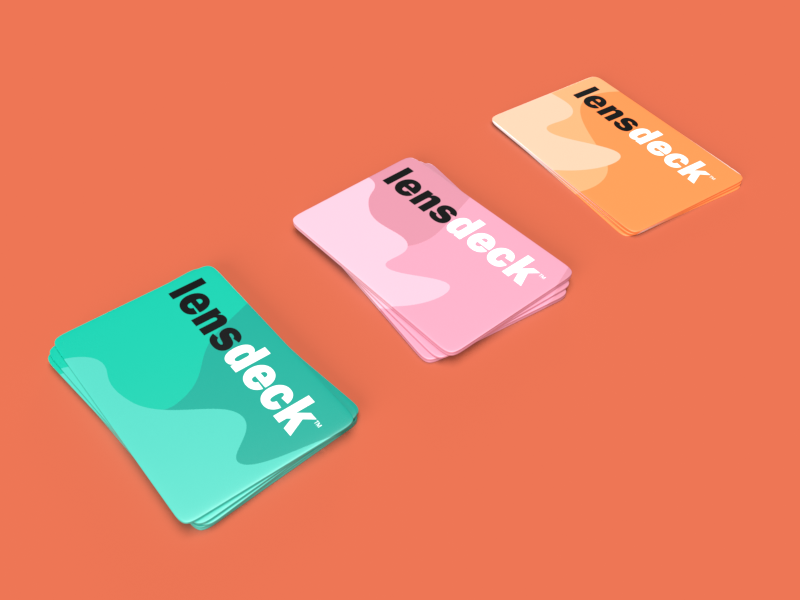
1 Setup and Brave Space
To start playing, divide the deck into three separate piles by color and keep the cards face down. Shuffle each pile before you begin. Once the cards are set up, we recommend that teams establish Brave Space or communication norms before jumping in to preserve confidentiality and encourage vulnerability.
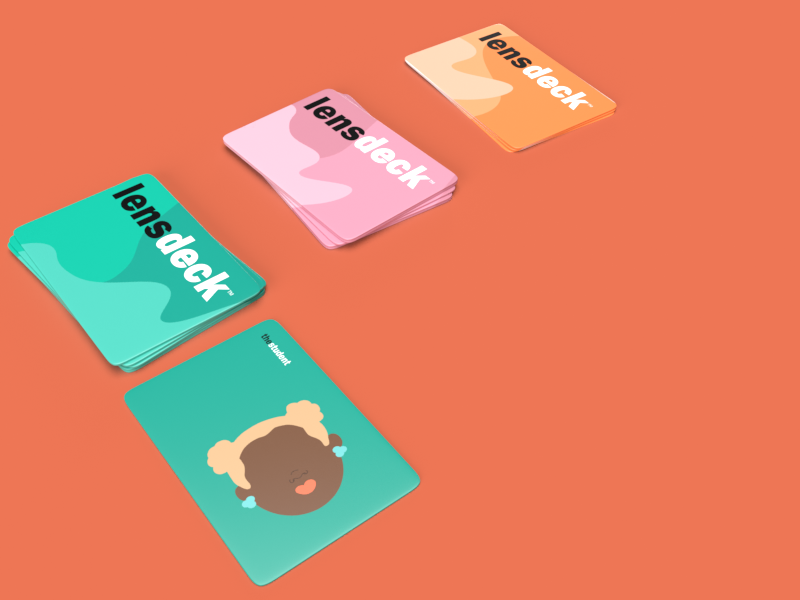
2 Identify the Student
When the team is ready, turn over one teal card to reveal a student. Each team member should share at least one thing they observe, touching on the students’ perceived gender, race, ethnicity, culture, style, etc. while striving for objectivity.
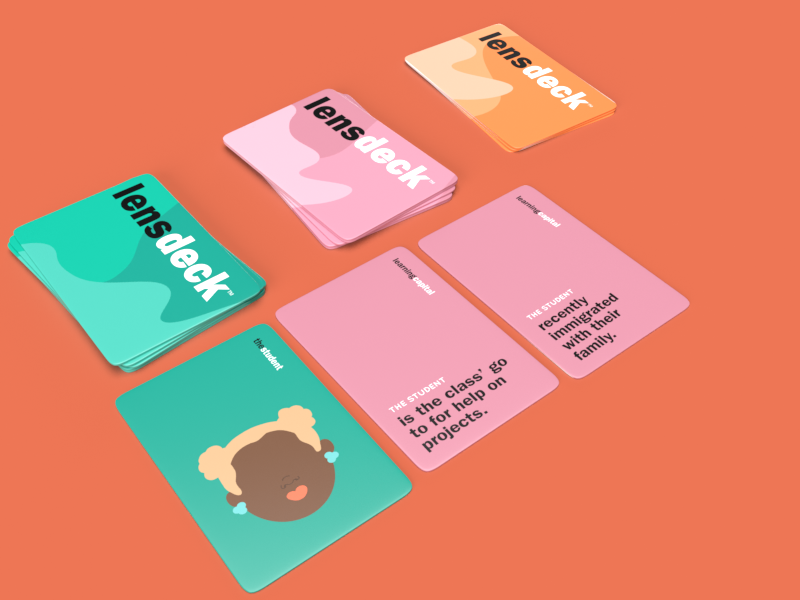
3 Reveal the Learning Capital
Turn over one pink card and place it next to the student. This is a students’ learning capital, an aspect of their identity that makes them a unique learner. Discuss how the learning capital influenced the initial observations shared about the student in step one and reflect on how that might impact the student in the school or learning community. Participants may turn over additional pink cards to complete the student persona.
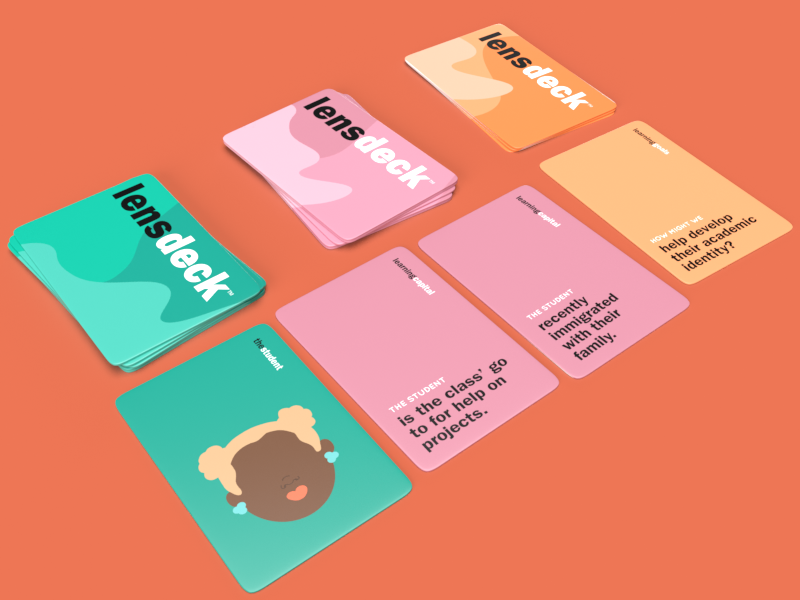
4 Connecting the Learning Goal
Turn over one orange card to reveal the learning goal. This card challenges participants to create a student-centered learning experience for the student persona developed in steps one and two. During this step, focus on being purposeful about:
Moving students toward becoming independent learners
Increasing opportunities for student voice and choice throughout a lesson or learning experience
Designing learning opportunities that truly meet the student’s unique and individual needs
How might I use LensDeck®?




Educators.
Educators, if you see one of your students in these cards, start there. Choose one student in one class and design a lesson that taps into their previous knowledge, their culture, their interests. Seek feedback from your students. It’s never too late to get curious and ask questions.
Administrators.
Administrators, provide time for teachers and their teams to lean in and dig in. The more time teams get to talk about students and their learning potential from an asset-based lens, the closer schools can get toward creating more equitable learning environments for all students.
Coaches.
Instructional & Technology Coaches, use LensDeck as a tool to coach for equity. Ask questions, probe thinking, and seek to understand each instructional decision so your clients can become more reflective and effective educators.
Counselors.
Counselors & Social Workers, use LensDeck to reflect on how you intentionally build relationships with students on your caseload. While you may not be using the Learning Goals card to design a lesson, consider what might you need to understand about your students to help them define their future path? Or what steps might you take to better support them in their academic spaces?